How to Choose a Helmet That's Actually Safe (Not Just Cheap)
Many riders choose helmets based on price alone, but a cheap helmet can be a costly mistake. Discover how to pick a helmet that offers genuine protection without breaking the bank on Malaysia’s busy streets.
What Safety Certifications Really Mean (SIRIM, ECE, DOT, Snell)
In Malaysia, the only helmet certification that legally matters for road use is SIRIM MS1:2011. This is the Malaysian standard enforced by JPJ, so every helmet sold locally must carry this approval. You'll find a label stitched inside the helmet—not just a sticker—confirming compliance. Without it, you risk a fine and, more importantly, your safety.
Many quality helmets also meet the European ECE 22.06 standard, which is widely accepted and often seen on imported lids. It's a rigorous test that evaluates impact absorption, penetration resistance, and strap strength. If a helmet has both SIRIM and ECE marks, that's a good sign.
Be cautious with DOT (US Department of Transportation) certification. DOT is not accepted for road use in Malaysia because it relies on manufacturer self-testing and faces less oversight. Some cheap helmets may display a DOT sticker, but without SIRIM, they're illegal here.
Snell certification is a voluntary, race-focused standard. It involves higher impact tests, but for everyday commuting, it's unnecessary and can make helmets heavier and more expensive. Save that for the track.
Always check inside the helmet: the certification label is your proof that it has passed real safety tests. A shiny sticker on the outside means nothing if it's not backed by proper standards.
The Perfect Fit: How to Measure Your Head and Test a Helmet
Getting the right fit is just as important as the helmet's safety rating. A loose helmet can fly off in a crash, while one that’s too tight will be painful and distracting. Here’s how to find that just-right fit.
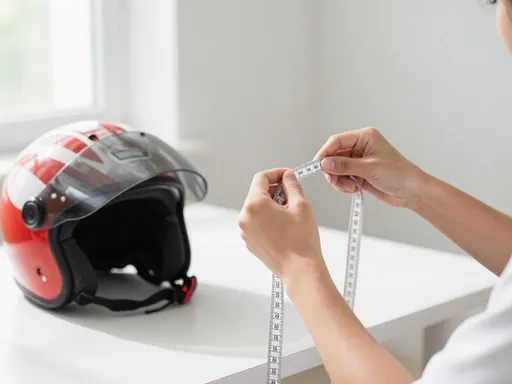
Start by measuring your head. Grab a flexible tailor’s tape measure and wrap it around the widest part of your head—about 2 cm above your eyebrows and ears. Make sure the tape is level all the way around. Note the measurement in centimetres, because every brand uses its own size chart. A size L from one manufacturer might be an M in another, so always check the chart before buying.
When you try on a helmet, it should slide on with a bit of effort. Once it’s in place, pay attention to the cheek pads. They should press firmly against your cheeks without pinching or causing pain—you’ll likely feel like you’re making a slight “pout.” The helmet should sit snugly around your entire head, with no gaps at the temples or the back.
Now for the shake test. Hold your head still and move the helmet with your hands. It shouldn’t slide around or shift position. Then, nod and shake your head gently. The helmet should stay put—if your skin moves with the liner, that’s a good sign. Finally, wear the helmet for at least 10 minutes inside the shop. Any slight discomfort will likely turn into a headache after an hour in KL traffic. If you feel pressure points on your forehead or the top of your head, it’s not the right shape for you. A well-fitted helmet feels secure all over, with no wobbling and no painful tight spots.
Helmet Types: Full-Face vs. Open-Face vs. Modular for Malaysian Riders
Choosing the right helmet type is about balancing protection, comfort, and how you ride. In Malaysia’s mix of scorching sun, sudden downpours, and stop-start traffic, each design has clear trade-offs.
Full-face helmets offer the most complete coverage. A reinforced chin bar shields the entire jaw and face — areas frequently injured in motorcycle accidents. For daily commuters filtering through KL traffic or weekend riders carving backroads, this is your safest bet. Modern full-face lids often include well-designed ventilation channels that combat the heat, and a quality visor keeps rain out without fogging if treated properly.
Open-face (or half) helmets trade protection for convenience. You get a lightweight feel, better peripheral vision, and easier communication, which can be appealing for short city hops or those who wear glasses. But there’s no getting around the fact that your face is completely exposed. In a fall, even at low speeds, the chin and jaw are at high risk. Open-face helmets are only suitable if you’re riding a low-speed scooter in a housing area — and even then, we recommend at least a reinforced chin guard if possible.
Modular (flip-up) helmets attempt to combine both worlds: ride with the chin bar down for full protection, or flip it up when you’re stationary or want more airflow. They’re popular among tourers and delivery riders who frequently stop. However, the hinge mechanism adds weight, and in a crash the movable chin bar may not be as strong as a solid full-face shell. Also, some models can feel top-heavy after a long day.
For Malaysian conditions, ventilation is critical. A full-face or modular helmet with multiple vents, breath-deflecting spoilers, and quick-dry liners will help you cope with 34°C heat and sudden rain. Look for helmets with Pinlock-ready visors to reduce fogging when humidity spikes. If you wear spectacles, many full-face helmets now accommodate eyewear with cutouts in the lining.
For most riders, a full-face helmet is the smartest investment. It delivers the best protection against both impact and weather, and with the right ventilation you can stay comfortable year-round. If you absolutely need the flip-up feature, choose a modular from a reputable brand and make sure it locks securely in the down position while riding.
Key Features That Boost Safety Beyond the Shell
The shell is just the beginning—true safety comes from a suite of often-overlooked features that work together during a crash. When you're riding in Malaysia's variable weather and dense traffic, these details matter more than you think.
Visor quality: A good visor does more than shield your eyes. Look for anti-scratch treatment so drizzle doesn't leave permanent marks, and UV protection to guard against harsh tropical sun. Pinlock-ready visors let you install an anti-fog insert—a lifesaver during sudden downpours when your breathing fogs up the shield.
Retention system: The strap that holds the helmet is critical. The double D-ring setup, commonly found on racing lids, is the most secure because it won’t loosen accidentally. Micrometric buckles are quicker to fasten and fine for commuter speeds, but they can wear over time. In a real impact, that extra security from a D-ring could make a vital difference.
Shell construction: Not all hard outer shells are equal. Polycarbonate helmets are affordable and absorb energy by flexing, but they can be heavier. Fiberglass shells are lighter and stronger, dispersing impact more effectively. Composite blends (often with carbon or Kevlar) offer the best strength-to-weight ratio but cost more. For daily commutes, a well-engineered polycarbonate shell can still serve you well—provided the inner liner does its job.
Multi-density EPS liner: Inside the shell, the expanded polystyrene foam isn't uniform. Premium helmets use layers of different densities: softer foam for lower-speed knocks, firmer foam for high-energy crashes. This graduated absorption helps reduce rotational forces on your brain. When you handle a helmet, you can't see this, but it’s worth checking the product specs for “multi-density EPS.”
Visibility on the road: A helmet’s color and reflective bits can actively prevent an accident. Bright white, neon yellow, or orange make you stand out against Malaysia’s grey roads and overcast skies. Many quality helmets incorporate reflective panels or piping on the back and sides—these catch headlights at night, giving cars vital extra seconds to notice you. It's a simple, passive safety addition that costs nothing in comfort.
All these features contribute to a holistic safety package that a certification sticker alone can't guarantee. Next time you try on a helmet, look beyond the price tag and examine these details carefully.
Balancing Budget and Safety: What to Expect at Each Price Point
Balancing budget and safety doesn’t have to mean cutting corners. With a clear understanding of what you get at different price levels, you can make a smart purchase without overspending.
At the entry level, helmets priced under RM150 can still provide essential protection—as long as they carry the SIRIM label. These helmets meet the minimum safety standards required by Malaysian law and are often basic open-face or budget full-face models. Expect hard polycarbonate shells, simple padding, and limited ventilation. They’ll protect your head in a crash, but comfort and durability may be compromised for daily use.
Moving up to the RM150–RM400 range, you’ll notice a step up in both comfort and materials. Helmets in this bracket often feature improved EPS liners, better air channels for ventilation, and anti-scratch visors. Brands like GIVI and KYT offer many models here with decent build quality. The padding is usually removable and washable, which is a big plus for our humid Malaysian weather.
Once you pass the RM400 mark, you’re paying for premium materials and advanced features. Shells may be made of fibreglass composite or carbon fibre, reducing neck strain on longer rides. Visors might be Pinlock-ready and offer UV protection. Ventilation becomes more effective, and the interior linings are often made of moisture-wicking, anti-bacterial fabrics. These helmets are typically lighter and more aerodynamic, enhancing your ride without sacrificing safety.
Remember, an unbranded helmet without proper safety labels is never a bargain—no matter how low the price. Always check for the SIRIM sticker and a visible certification mark. To stretch your budget, keep an eye on year-end sales and online promotions from reputable distributors. It’s not uncommon to snag an LS2 or KYT full-face originally priced above RM400 for closer to RM300 during clearance events.
Ultimately, the best helmet is the one that fits well, meets safety standards, and suits your riding style—without leaving your wallet empty.
Common Helmet Buying Mistakes That Put You at Risk
Even with the best intentions, it's easy to fall into traps that turn a helmet from a lifesaver into a liability. Knowing what to avoid is just as important as knowing what to look for.
One of the most frequent errors is buying a helmet that’s too large. Many riders prioritise comfort over snugness, but a loose helmet can shift or even come off during a crash, leaving you unprotected. A properly fitted helmet should feel firm all around without painful pressure points.
Another risky move is using a second-hand helmet when you can’t verify its past. Helmets that have been dropped or involved in an accident may have internal damage invisible to the naked eye. Without knowing the history, you might be trusting your safety to a compromised shell.
Style tempts many away from safety. Novelty helmets — those half-shells or beanies — might look cool, but they lack the coverage and impact protection required by Malaysian safety standards. They’re illegal on public roads and offer almost no defence in a real-world incident.
Don’t assume a hefty price tag guarantees superior safety. While quality often costs more, a higher price can reflect luxury branding, complex ventilation, or exclusive graphics rather than better impact absorption. Focus on certifications and fit instead of the price alone.
Finally, watch out for old stock. Helmets degrade over time, even sitting on a shelf. The foam liner hardens and adhesives weaken. Always check the manufacturing date (usually on a sticker inside) and avoid helmets more than five years old. In a tropical climate like Malaysia’s, heat and humidity can accelerate deterioration, so choose fresh stock whenever possible.
When to Replace Your Helmet: The 5-Year Rule and More
Your helmet’s job is to protect your head, but it won’t last forever. Even if it looks fine on the outside, the materials inside are slowly aging, and everyday use takes its toll. Knowing when to retire your helmet is just as important as choosing the right one.
Start with the 5‑year rule. Manufacturers and safety experts generally recommend replacing your helmet five years from the date of manufacture, not from the day you bought it. The EPS foam liner that absorbs impact gradually hardens and loses its ability to cushion a blow, especially in our hot and humid Malaysian climate. Heat accelerates degradation, so if your helmet lives in a baking top box or parked under the sun daily, you might want to shorten that timeline. Check the manufacture date printed on a sticker inside the shell or on the chin strap – it’s often a small clock-like symbol with the month and year.
Here’s a clear checklist of when you should replace your helmet immediately, no matter its age:
- After any significant impact: Even a drop from waist height onto a hard floor can compress the EPS liner. The damage is often invisible – the outer shell might only have a scuff, but the foam underneath may have crushed and won’t protect you in the next crash. If you’ve been in an actual collision, replace the helmet right away, even if you feel fine.
- When the interior padding is worn out: The comfort liner compresses over time, causing the helmet to fit loosely. A loose helmet can shift or fly off during an accident. If you’ve already tightened the cheek pads and strap and it still slides around, it’s time for a new one.
- After exposure to chemicals or extreme heat: Fuel, solvents, certain cleaning products, or even leaving your helmet in a blazing hot car can weaken the shell and degrading foam. If you notice any discoloration, bubbling, or a strange smell, retire it.
- If the visor is heavily scratched: Scratches don’t just look bad – they scatter light, especially during rainy night rides or low-angle morning sun on Malaysian roads. A compromised visor reduces your reaction time and can cause eye fatigue. If polishing doesn’t clear them up, swap the visor or, if the helmet is old, upgrade entirely.
A helmet that’s past its prime is not just uncomfortable – it’s a safety risk. Keep a mental note of when yours was made, and don’t wait for visible signs to replace it. Your brain will thank you.
FAQ
What helmet safety standard is required in Malaysia?
In Malaysia, helmets must meet the SIRIM MS 1:2011 standard (or the latest revision) with the SIRIM label affixed. This standard tests impact absorption, retention systems, and penetration resistance to ensure the helmet can protect you effectively. Always look for the SIRIM certification mark before purchasing to stay legal and safe.
Can I use an open-face helmet safely?
Open-face helmets are legal in Malaysia and offer decent protection at lower speeds, but they leave your chin and jaw exposed. For daily commuting, especially in heavy traffic or on highways, a full-face helmet provides significantly better coverage and injury reduction. Consider a modular or flip-up helmet if you want the convenience of an open face with the option of full-face protection.
How often should I replace my motorcycle helmet?
Replace your helmet every 3 to 5 years from the date of manufacture, even if it looks undamaged, because the protective materials degrade over time. After any significant impact or if you notice cracks, loose padding, or worn straps, replace it immediately. Frequent riders in Malaysia’s tropical climate may need to replace helmets sooner due to sweat and humidity accelerating wear.
Is a more expensive helmet always safer?
Not necessarily. A high price often reflects features like lightweight materials, superior ventilation, and brand prestige, but safety depends primarily on meeting standards like SIRIM and a proper fit. A mid-range helmet with the same certification can be just as safe as a premium one, so focus on fit, comfort, and the standard mark.
What should I do if my helmet doesn't fit perfectly?
A helmet that doesn’t fit perfectly won’t protect you optimally; it should feel snug but not painfully tight, with no pressure points. If it’s too loose or too tight, exchange it for a correct size immediately—never compromise on fit. To find your size, measure your head circumference and try on helmets in person, ensuring the cheek pads firmly touch your cheeks and the helmet doesn’t move when you shake your head.