How to Plan a First Longer Scooter Trip Out of the City
Stepping out of the city for your first longer scooter ride can be thrilling yet daunting. This guide breaks down what you need to know before you go, from route choices to what to pack, ensuring a safe and memorable adventure.

Choosing the Right Destination and Route
For a first longer ride on your scooter, start with a destination that's around 50 to 100 km away. That distance gives you a taste of touring without exhausting you or your bike, and it’s easy to bail out if things don’t go as planned.
Rather than jumping onto a highway, look for scenic secondary routes that let you enjoy the ride. Coastal roads like the stretch along Port Dickson or winding kampung lanes can be far more rewarding than a wide toll road, and you'll often have better access to stops.
Plan your route using Google Maps or Waze and select the “avoid highways” or “avoid tolls” option. This shows smaller roads with more character and less traffic, ideal for a relaxed pace. Always check the road condition using Street View or recent reviews, and be cautious of steep hills or sharp grades that might strain a scooter’s engine.
Break the trip into chunks by identifying pit stops with food and petrol stations. Even a 60 km ride can feel long if you’re new to it, so knowing where you can grab a drink or refuel makes the journey feel manageable and safe.
Prepping Your Scooter for the Journey
Before you head out, give your scooter a thorough once-over. A few simple checks can prevent breakdowns and keep your ride smooth.
Start with your tyres. Check the pressure against the manufacturer’s recommendation—don’t forget the spare if you have one. Inspect the tread depth; worn tyres are dangerous, especially if you encounter rain, which is common on Malaysian roads.
Next, check the engine oil level and top up if needed. If your scooter is liquid-cooled, also inspect the coolant level. An overheated engine can ruin a trip quickly.
Make sure all lights are working—headlamp, brake light, and turn signals. Test your brakes; they should feel firm and responsive. A quick press of the horn confirms it’s functional, which is crucial for alerting other drivers in traffic.
Fill up your tank before leaving, and plan your fuel stops. In Malaysia, petrol stations are plentiful along major highways, but if you’re heading into more rural areas, it’s wise to know where the next stop is. Apps or a quick check on Waze can help map out stations along your route.
If your scooter is due for a service, or if it’s been a while, consider getting it checked by a mechanic. A pre-trip inspection can identify potential issues like a loose chain, worn brake pads, or old spark plugs. It’s better to sort these out at your trusted workshop than on the roadside.
Taking a little time to prepare your scooter means you can focus on enjoying the ride with peace of mind.
What to Pack: Essentials for a Day Trip
Packing light but smart makes all the difference on a day trip. Overloading your scooter can affect handling, so stick to the essentials.
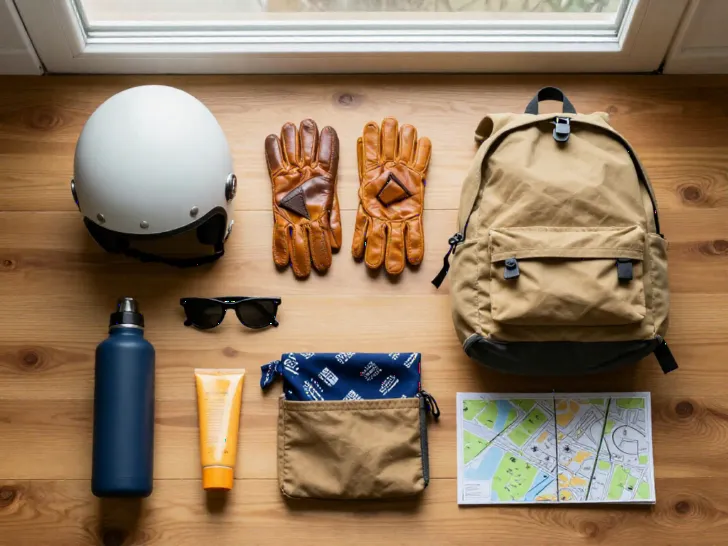
- Helmet and riding gear – A properly fastened helmet is mandatory, and gloves, a jacket, and closed shoes offer protection and comfort.
- Rain gear – Malaysia’s tropical downpours can roll in fast; a compact raincoat or waterproof poncho keeps you dry without taking up much space.
- Basic toolkit – Carry a small multi-tool, a tyre repair kit (sealant and CO₂ canisters), and spare fuses. They’ll help with minor fixes without requiring a workshop.
- Navigation and power – A phone mount keeps your map visible, and a fully charged power bank plus cable ensures you won’t get stranded with a dead battery.
- Hydration and snacks – A reusable water bottle and some high-energy snacks (like granola bars) keep you fuelled without having to stop for a full meal.
- Mini first-aid kit – Just a few plasters, antiseptic wipes, and pain relief for small scrapes or headaches.
- Documents and cash – Always carry your identity card, driving licence, and a copy of your road tax or insurance. Cash in small notes is handy for tolls, parking, or kampung stalls that don’t accept e-wallets.
Safety and Riding Tips for Longer Rides
Staying alert on unfamiliar roads is key to a smooth trip. It's easy to get lulled by the rhythm of the ride, but your safety depends on staying visible and focused.
Take regular breaks – stop every 45 to 60 minutes, even if you don't feel tired. Use these stops to stretch your legs, hydrate, and check your scooter's tyres and lights. Roadside rest areas or small kampung stalls make perfect quick stops.
Make yourself seen – wear bright or reflective gear, especially in the early morning or evening. Keep your headlight on at all times; it's required by law in Malaysia and helps other road users spot you.
Communicate early – signal at least 3 seconds before turning or changing lanes. Leave a generous gap between you and the vehicle ahead. Tailgating is risky on any road, but on winding trunk roads, it leaves no margin for sudden stops.
Scan for hazards – watch out for potholes, loose gravel, and sudden patches of sand, particularly after rain or near construction zones. Animals like monkeys, dogs, or even cattle can wander onto rural roads without warning. Be ready to slow down or brake smoothly.
Share your plan – before you set off, tell a friend or family member your intended route and expected return time. A quick message with your location updates along the way adds an extra layer of security.
Budgeting: Costs to Expect on a Scooter Day Trip
A day trip on your scooter doesn't have to break the bank, but planning your expenses ahead of time lets you relax and enjoy the ride. Here’s a simple breakdown to help you budget.
Petrol is usually the cheapest part of the journey. Most modern scooters in Malaysia can cover 30–40 km per litre, so a 100 km round trip might use about 3 litres of fuel. At current pump prices, that’s roughly RM6–10. If your destination is farther, just scale it up accordingly – a 200 km trip could set you back RM15–20. Always fill up before leaving the city to avoid hunting for stations in unfamiliar areas.
Tolls can add up quickly if your route includes highways, but many scenic back roads are toll-free. I prefer to avoid highways on a scooter – not only does it save money, but the slower pace lets you take in the countryside. If a highway is unavoidable, check the toll rates in advance; for a typical day trip, you might pay between RM5 and RM15 each way.
Meals and drinks are part of the experience. Local kopitiams and roadside stalls are affordable and authentically Malaysian. Budget around RM10–15 for a satisfying meal, plus a few ringgit for a cold drink. With a couple of pit stops, RM20–30 is a comfortable estimate for food.
Always carry some extra cash for the unexpected. You might need to pay for a parking ticket at a popular spot (usually RM1–3), or if your tyre picks up a nail, a roadside repair could cost RM10–20. I suggest tucking away at least RM50 in a separate pocket for emergencies – it’s peace of mind on two wheels.
While not essential for a local day trip, consider personal accident coverage if you ride frequently. Some insurers offer add-on motorcycle travel insurance for as little as a few ringgit a day. It’s a small cost that can cover medical bills or bike recovery, especially if you’re heading into remote areas.
With everything added up, a comfortable day trip budget often falls between RM50 and RM100, fuel and food included. By planning ahead, you can focus on the open road, not your wallet.
Post-Trip: Winding Down and Learning for Next Time
Once you’re back home, take a few minutes to reflect while the ride is still fresh. A little note-taking now makes your next trip even smoother.
- Jot down your fuel consumption. If you tracked how many litres you used and the kilometres covered, you’ll be able to budget more accurately and choose fuel stops with confidence next time. A simple phone note or a notebook in your scooter’s underseat storage works perfectly.
- Unpack with intention. As you empty your bag, make two piles: things you actually used and things that just added weight. Did you bring a raincoat you never touched? Was the sunscreen forgotten? Adjust your packing list accordingly—soon you’ll have a lean, personalised kit that fits every Malaysian day trip.
- Share your experience. Post a photo or a short video from your ride on social media with the hashtag #ScooterLifeMY. Tag the places you stopped at and mention fellow riders you met. It’s a great way to inspire others and get tips from the local scooter community.
- Look ahead. Before the post-ride buzz fades, pick a new destination that’s just a little farther than this one. Gradual distance increases build your stamina and road wisdom without feeling overwhelming. You might even plan a weekend overnight trip once you’re comfortable with a full-day ride.
FAQ
What is the best scooter for longer trips in Malaysia?
For highway-capable comfort, look for 150cc-250cc scooters like the Honda ADV150 or Yamaha NMAX; they offer enough power for safe overtaking and have larger fuel tanks for longer distances. More budget-friendly 125cc models like the Yamaha Ego Avantiz are reliable but require extra planning due to lower top speed. Always test ride with your intended gear to check ergonomics.
How long should my first out-of-city ride be?
Start with a half-day trip covering about 100-150 km total, which lets you test endurance without exhaustion. Choose a destination with a known route and rest stops, and plan to return before dusk to avoid night riding while still building confidence.
Is it safe to ride a scooter on highways?
Yes, it can be safe if you follow rules: stick to the left lane, ride defensively, and maintain a steady speed that matches traffic flow. Ensure your scooter is legally highway-legal (minimum 50cc, but realistically 125cc+ for safe merging) and you wear full protective gear including a rated helmet and jacket.
What should I do if it rains heavily during the trip?
Pull over to a safe rest area or petrol station immediately—don’t ride through flooded roads or if visibility is severely reduced. Wear waterproof gear from the start, and keep your phone and documents in a dry bag. Wait for the rain to ease; when resuming, reduce speed, increase following distance, and avoid sudden braking on wet surfaces.
Can I carry a pillion on a longer scooter trip?
Yes, but both rider and pillion need proper gear and the scooter should be powerful enough to handle the extra weight without straining. Check your scooter’s manual for maximum load, adjust tire pressures, and plan more frequent stops as passengers often tire faster. Practice short rides together before attempting a long journey.